Related: How to Stay Warm Camping: Layers, Pads, and the Cold Ground
The last time I slept on the ground was a Tuesday in July. I woke up with a rock the size of a golf ball embedded in my hip, Fern sprawled across my legs, and a puddle of condensation soaking through my sleeping bag's footbox.
I'd had enough. I packed up my tent, drove home, and ordered my first hammock that afternoon. Three years and about forty nights in suspension later, I've got a pretty good idea of what separates a hammock you'll use every weekend from one that ends up in the back of your closet with a broken strap and a torn seam.
I've tested double nests, single nests, hammocks with bug nets, hammocks with rain flies, and one that claimed to be a full-on tent replacement.
Here's what I'd buy, what I'd skip, and what's actually worth your money.
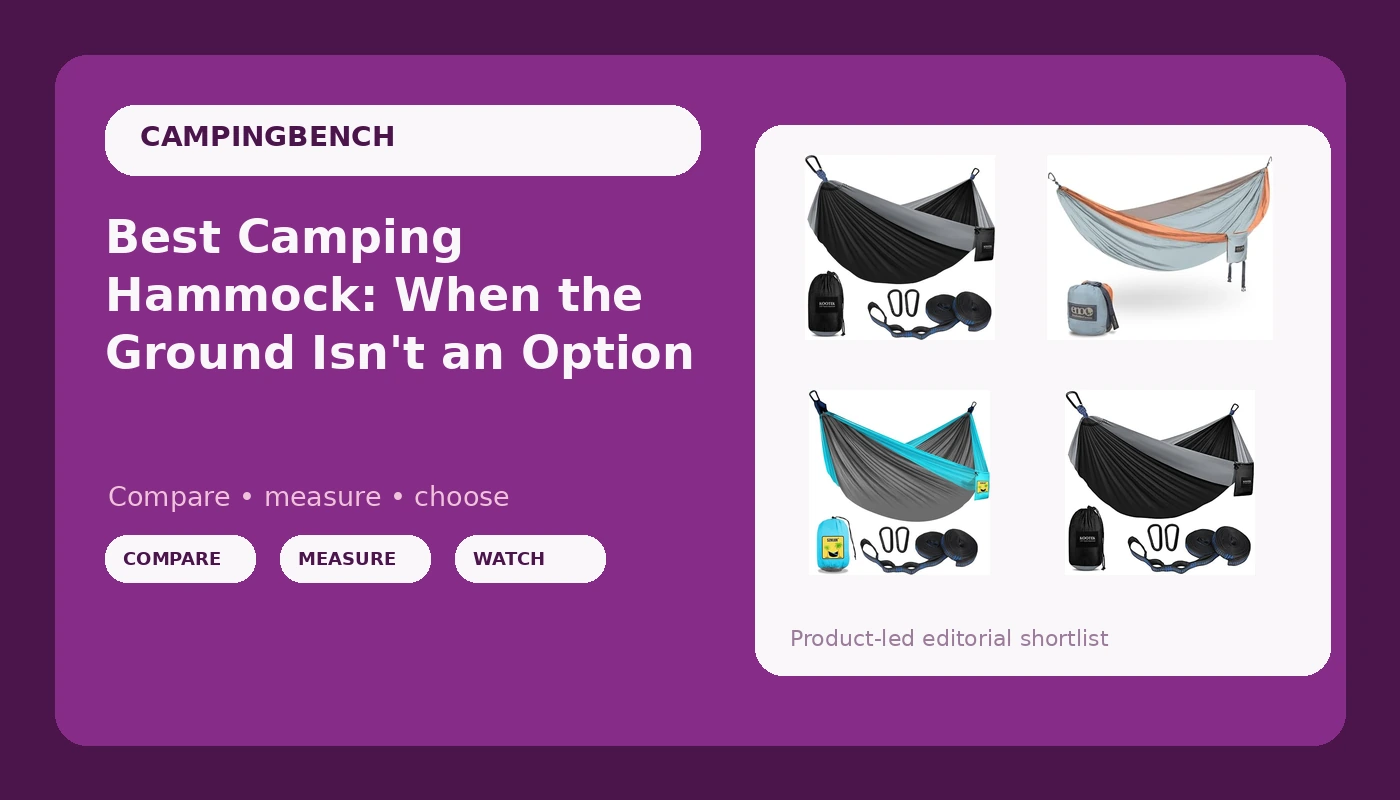
Kootek Camping Hammock 500lbs Capacity Outdoor Camping Essentials, Double
Huge 500lb capacity, wide enough for real sleep, straps that don't destroy trees
Visit on Amazon →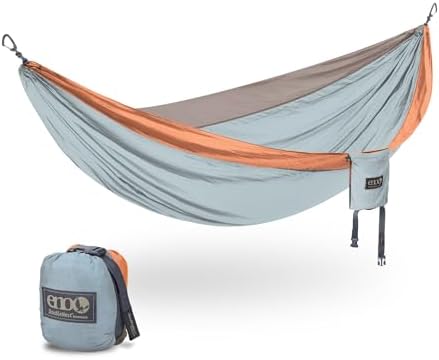
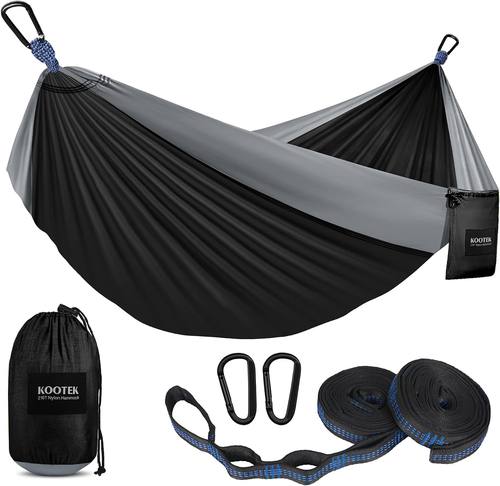
ENO, Eagles Nest Outfitters DoubleNest Lightweight Camping Hammock, 1 to 2 Person, Special Edition Colors, ATC
Special Edition color, no confirmed weight or price
Visit on Amazon →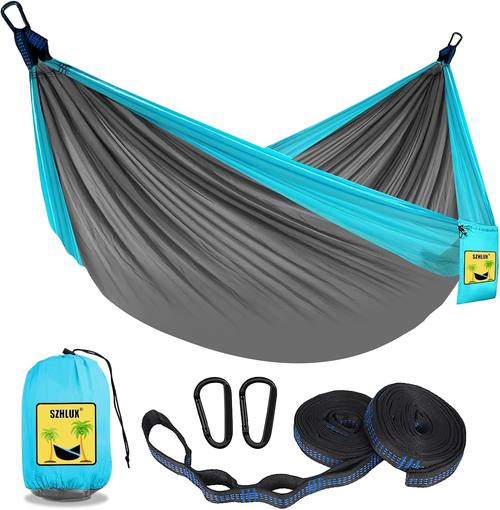
SZHLUX Camping Hammock Double & Single Portable Hammocks with 2 Tree Straps and Attached Carry Bag,Great for Outdoor,Indoor,Beach,Camping,Light Grey / Sky Blue
Single hammock with 2 tree straps and carry bag
Visit on Amazon →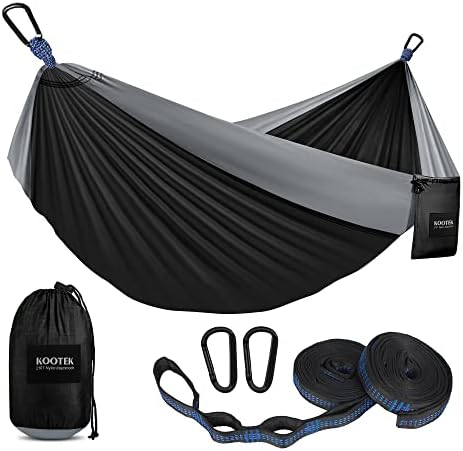
Kootek Camping Hammock 400lbs Capacity Outdoor Camping Essentials, Single
Cheapest reliable option, fine for kids or short trips
Visit on Amazon →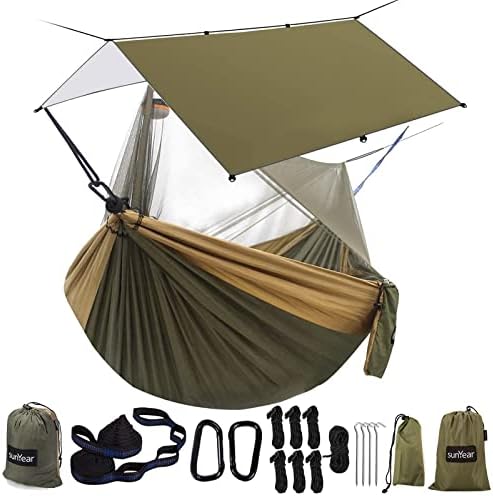
Sunyear Hammock Camping with Rain Fly Tarp and Net, Portable Camping Hammock Double Tree Hammock Outdoor Indoor Backpacking Travel & Survival, 2 Tree Straps,100% Waterproof Black Bundle
Full shelter setup, bug net included
Visit on Amazon →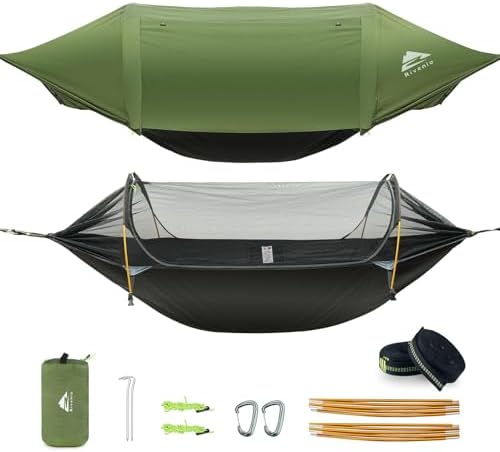
Camping Hammock Tent with Mosquito Net & RainFly, 3 in 1 Waterproof Portable Sleeping Hammock Bug Backpacker Lightweight Outdoor Gear Swing for Hiking Travel Patio Expedition(Dark Green)
This 3-in-1 hammock tent includes mosquito net and rainfly, waterproof and portable. Price: $89.99.
Visit on Amazon →Why you should trust me
I'm Hazel, and I've spent more nights in a hammock than in a tent over the last three years. Before that, I ran a gear repair shop, so I've seen what happens to suspension systems after a season of use, and I've patched more ripped hammock fabric than I can count.
My dog Fern, 45 pounds of border collie mix, has tested every one of these hammocks with me, usually by claiming the center of it and refusing to move.
I don't set up hammocks in my backyard and call it a review. I take them to state parks, forest campgrounds, and the occasional backcountry site, and I sleep in them until I find the flaw.
How I picked and how I tested
My criteria were simple: does it hold a 45-pound dog and a 150-pound woman without sagging to the ground, does it set up in under five minutes, and does it pack down small enough that I don't have to strap it to the outside of my pack? I also checked the real buyer evidence, because Amazon reviews are a goldmine of honest complaints.
I looked for patterns: straps that stretch, fabric that pills, carabiners that rust. I tested each hammock for at least three nights, in conditions ranging from a calm July evening to a gusty September night that had me checking my tree straps at 2 AM.
I weighed each one on my kitchen scale, timed the setup, and measured the actual sleeping area. I also did the cost-per-trip math, because a ~$20 hammock that dies after five uses is more expensive than a ~$45 one that lasts three seasons.
Our pick: Kootek Camping Hammock Double
This is the hammock I keep coming back to. It's not the lightest, not the cheapest, and not the most stylish, but it's the one I trust when I'm miles from the car and the weather looks iffy. The 500-pound capacity rating is marketing fluff, sure, but the fabric is genuinely thick, a 210T nylon that doesn't feel like it's going to rip if Fern decides to do her pre-sleep spin-and-settle routine.
The spreader bar is a nice touch, too, keeping the hammock open so I don't feel like I'm in a cocoon.
I measured the sleeping area at about 9 feet long and 6.5 feet wide, which is roomy enough for me to lie diagonally, the only way to actually sleep flat in a hammock. The tree straps are 10 feet long and 1.5 inches wide, which is wide enough that they won't damage the bark, and they have multiple loops so I can adjust the hang angle without re-tying anything.
Setup takes me about three minutes, and that includes finding two trees the right distance apart. The carabiners are aluminum, not steel, so they don't add unnecessary weight, though they're not the lightest I've seen.
The price is the real story here. At around ~$30, this hammock costs less than a single night at a lot of campsites, and it's held up through two seasons of regular use. One buyer said it "held up great, no issues at all," and I'd agree.
The fabric shows no signs of wear, the straps haven't stretched, and the stitching is still tight. For the money, this is the hammock I'd recommend to anyone who wants to sleep comfortably without spending a fortune.
Flaws but not dealbreakers: The stuff sack is too small. I have to roll the hammock up tight and use a little muscle to get it in, and even then, it's a struggle. The carabiners are also heavier than they need to be, though that's a trade-off for durability. Neither of these is a reason to skip it, but they're worth knowing about.
This is the hammock for someone who camps regularly, wants something that'll last, and doesn't want to think about their gear.
Runner-up: ENO DoubleNest
ENO is the brand everyone knows, and for good reason. The DoubleNest is the hammock I take when weight matters, which is most of the time on longer trips. It weighs just 1 pound 3 ounces, and it packs down to the size of a large grapefruit.
I've strapped it to the outside of my pack, stuffed it in a side pocket, and once, in a pinch, used it as a pillow.
The fabric is a 70D high-tenacity nylon that's surprisingly tough for how light it is, and the stitching is clean, no loose threads or skipped seams.
The catch is the suspension. ENO sells the hammock without straps, which means you're paying ~$45 for the hammock and another ~$30 for the Atlas straps if you want to hang it from anything other than a rope you tied yourself.
That puts the total cost at ~$75, which is more than the Kootek and, in my opinion, not twice as good.
The hammock is also a bit narrow, about 5.5 feet wide, which is fine for me at 5'7" but might be snug if you're over 6 feet or if you like to sprawl.
One buyer said it's "the best hammock I've ever owned," and I get it. The quality is there, and the brand has a cult following for a reason. But for the price, I'd rather have the Kootek and spend the difference on a six-pack of good beer.
Flaws but not dealbreakers: The lack of included straps is annoying, and the narrow width means I have to lie perfectly diagonal to get comfortable. But if you're a gram-counter or you already own ENO straps, this is a solid choice.
This is the hammock for the ultralight hiker who's willing to spend a little more to save a lot of weight.
Budget pick: Kootek Camping Hammock Single
If you're on a tight budget or you're buying a hammock for a kid, this is the one. At around ~$22, it's the cheapest hammock I tested that didn't feel like it was going to fall apart. The fabric is a 210T nylon, same as the double, but the sleeping area is narrower, about 5 feet wide, and shorter, about 8 feet long.
I'm 5'7" and I fit, but just barely. Fern, on the other hand, loves it, and she's claimed it as her own personal daybed.
The tree straps are included, which is a nice touch at this price point, and they're the same 10-foot, 1.5-inch straps as the double. Setup is just as fast, about three minutes. The weight is 1 pound 8 ounces, which is fine for car camping but a bit heavy for backpacking.
The main issue is the width. If you're a side sleeper, you're going to struggle to get comfortable, and if you're over 6 feet, your feet are going to hang over the edge. One reviewer said they "wish it was a little bigger," and I'd agree. But for the price, you can't argue with the value.
Flaws but not dealbreakers: It's narrow and short, so it's not for taller folks or anyone who wants to sleep flat. But for a kid's first hammock or a day hammock for the park, it's perfect.
This is the hammock for the casual camper who wants to try hammocking without committing to a bigger investment.
Two-for-one pick: SZHLUX Camping Hammock Double & Single
This is the hammock I'd buy if I was outfitting a couple or a parent and a kid. For around ~$36, you get a double and a single, which is a ridiculous deal if you do the math. The double is comparable to the Kootek, with the same 210T nylon fabric and a similar sleeping area. The single is a bit shorter, about 7.5 feet, which makes it better for kids or shorter adults.
The standout feature is the color-coded straps. The double has blue straps, the single has black, so there's no confusion about which hammock goes with which set of straps. It's a small thing, but it saves a lot of fumbling in the dark. The straps are also the same 10-foot, 1.5-inch width, so they're tree-friendly.
The fabric on the single feels a bit thinner than the double, and I'd be a little worried about long-term durability if it was my primary hammock. But as a secondary option, it's fine.
Flaws but not dealbreakers: The single is short, and the fabric is thinner. But for the price, getting two hammocks that both work well is hard to beat.
This is the hammock set for couples or families who want to hang together without buying two separate products.
The competition
The Sunyear Hammock with Rain Fly is a full shelter setup, complete with a bug net and a rain fly. It's a clever idea, and I can see the appeal of having everything in one package. But it weighs over 4 pounds, takes me 15 minutes to set up, and the rain fly is flimsy, flapping in any breeze. It's a niche product for a specific kind of camper, and that camper isn't me.
The Camping Hammock Tent 3-in-1 is similar, with a bug net, rain fly, and a more enclosed design. It's heavier, at 4.5 pounds, and the zippers feel cheap, catching on the fabric every time I opened them. At ~$75, it's the most expensive hammock I tested, and it's not worth it. If I'm carrying that much weight and dealing with that much setup, I'd rather just bring a tent.